totonoi Exploration News: Verification revealing the positive effects of deep breathing on totonoi
Apr 8, 2025

Thank you for always using "Sanokuni"!
Here is news from 100plus, the operator of Sanokuni, regarding research to deeply enjoy saunas!
At 100plus, we conduct research and business to explore saunas even more enjoyably!
We have announced the results of a verification clarifying the positive effects of "deep breathing" on "totonoi", so we are pleased to inform all Sanokuni users!
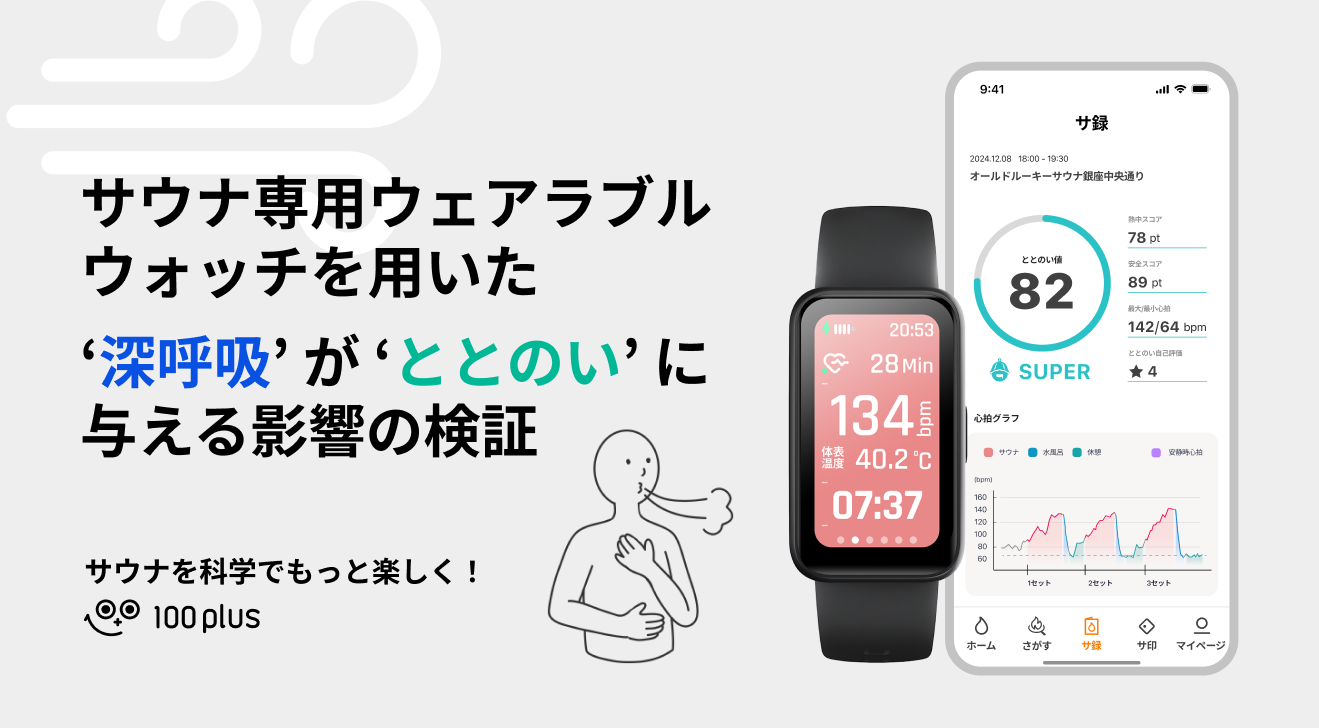
100plus, together with BREATHER Co., Ltd. (a deep breathing support device company) and Brain Sleep Co., Ltd. (a sleep solution company), conducted a demonstration experiment to clarify the relationship between saunas and breathing.
By clarifying the mechanism of "totonoi" through a scientific approach, we verified the "effects of breathing" in each phase of the sauna, cold bath, and rest.As a result of the verification, it was shown that consciously incorporating deep breathing may improve the quality of "totonoi".
■ Background of Implementation
Deep breathing is such an important bodily function that it is said to regulate the autonomic nervous system and bring the body into a relaxed state. In order to verify the potential of deep breathing in sauna bathing, we collaborated with BREATHER and Brain Sleep, and conducted a verification at a sauna facility in Tokyo. In the verification, we measured the physical effects during sauna bathing due to changes in breathing habits on 108 men wearing the dedicated sauna wearable watch "SHOWDOWN 1". In addition, during the verification, the test subjects incorporated deep breathing (Kihon no Kokyu (Basic Breathing)©) proposed by Takashi Onuki, a breathing consultant.
■ Verification Results
By incorporating deep breathing, a trend toward increased autonomic nervous system activity was observed in the cold bath and rest area.
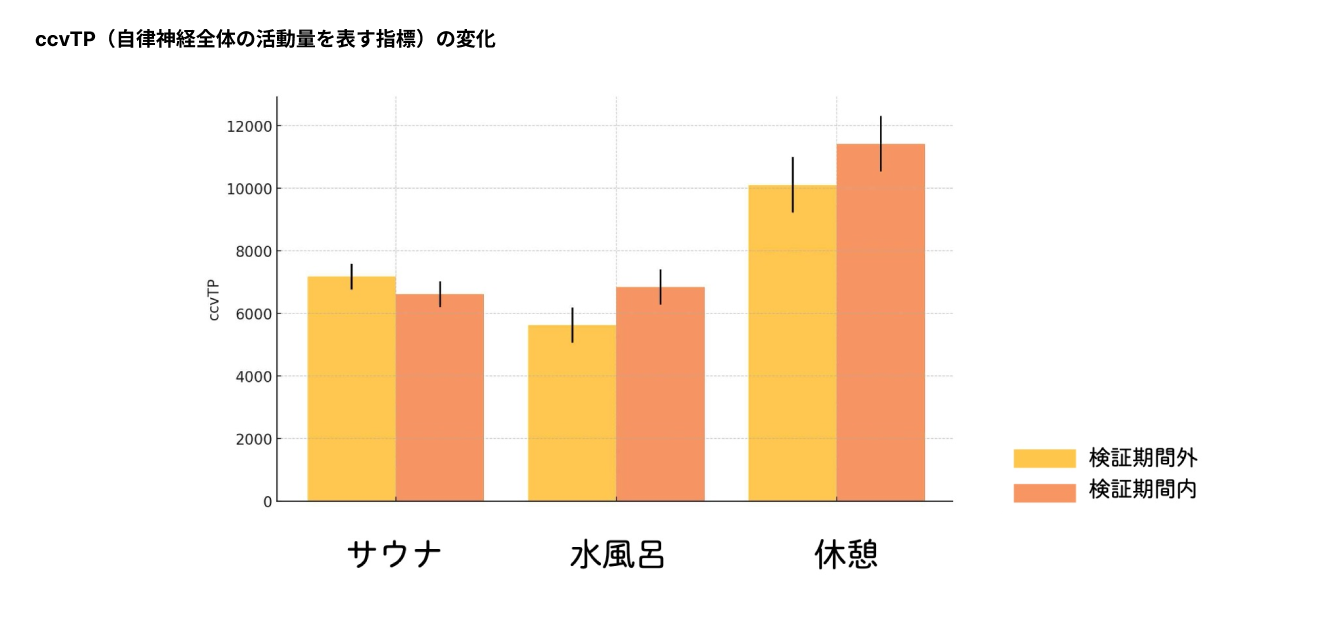
It was found that by incorporating deep breathing, the switching of the autonomic nervous system became more efficient compared to normal times. (Figure 1)
By incorporating deep breathing in the sauna room, the sympathetic nervous system was more activated than usual, and by incorporating deep breathing in the cold bath, the parasympathetic nervous system was activated.
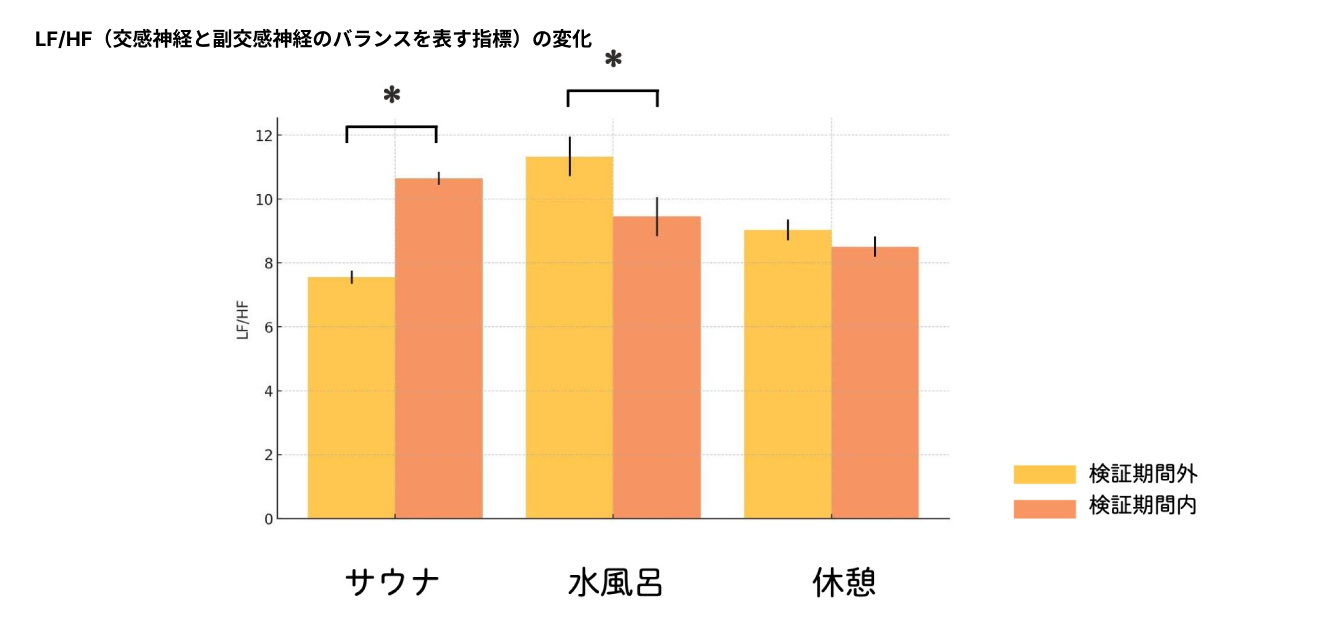
The higher the LF/HF value, the more dominant the sympathetic nervous system is, and the lower it is, the more dominant the parasympathetic nervous system is. It tends to rise in a stressed state. It rises in a standing position or under mental stress, and decreases when lying down or relaxing.
By incorporating deep breathing, activation of the sympathetic nervous system in the sauna was observed. This result suggests that the body may adapt more easily to high-temperature environments. In addition, in the cold bath, it was observed that the parasympathetic nervous system worked dominantly by incorporating deep breathing. It is thought that deep breathing reduced the burden on the body when using the cold bath and improved the relaxation effect (Figure 2).
By incorporating deep breathing, the duration of stay in the sauna and the rest area resulted in being shorter than usual.
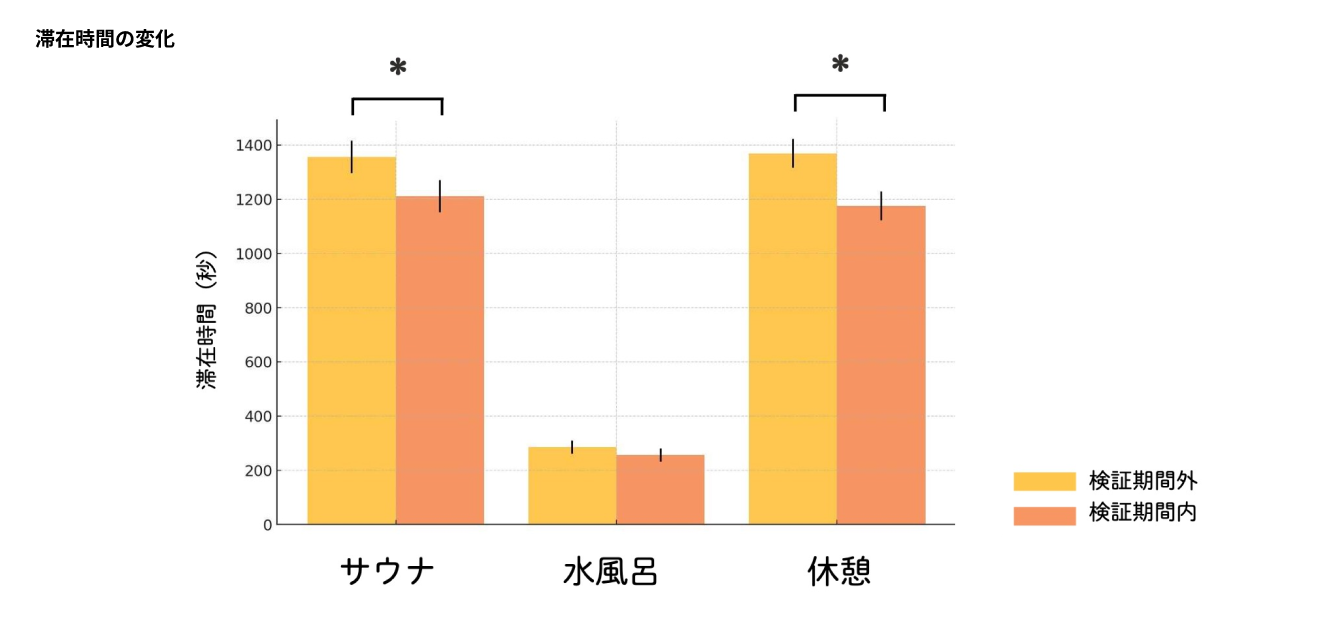
By incorporating deep breathing, the duration of stay in the sauna decreased by approximately 3 minutes compared to normal, and the duration of stay in the rest area decreased by approximately 3.5 minutes. This is thought to be because the improvement in breathing techniques enabled efficient autonomic nervous system activation in the sauna room and a swift transition to a relaxed state in the cold bath, and these are considered the causes. From these results, by adopting the correct breathing method according to the situation, one can achieve "totonoi" efficiently is considered possible. (Figure 3)
■ Summary
The results of this verification suggest that improving breathing methods enhances the efficiency of autonomic nervous system switching during sauna bathing, contributing to reducing the physical burden, improving the quality of relaxation, and contributing to a deeper "totonoi" experience. Furthermore, shortening the duration of stay in the sauna and cold bath enables efficient sauna usage, expecting practical benefits such as improving the facility's turnover rate and increasing user satisfaction. In the future, continuous research with more subjects and verification under different facility conditions are considered necessary.
Details of the experiment's outline are also described in the release below.
prtimes.jp/main/html/rd/p/000000005.000089156.html
At the same time, we have also announced the results of a verification showing the compatibility of breathing support devices and the sauna.
https://prtimes.jp/main/html/rd/p/000000006.000089156.html
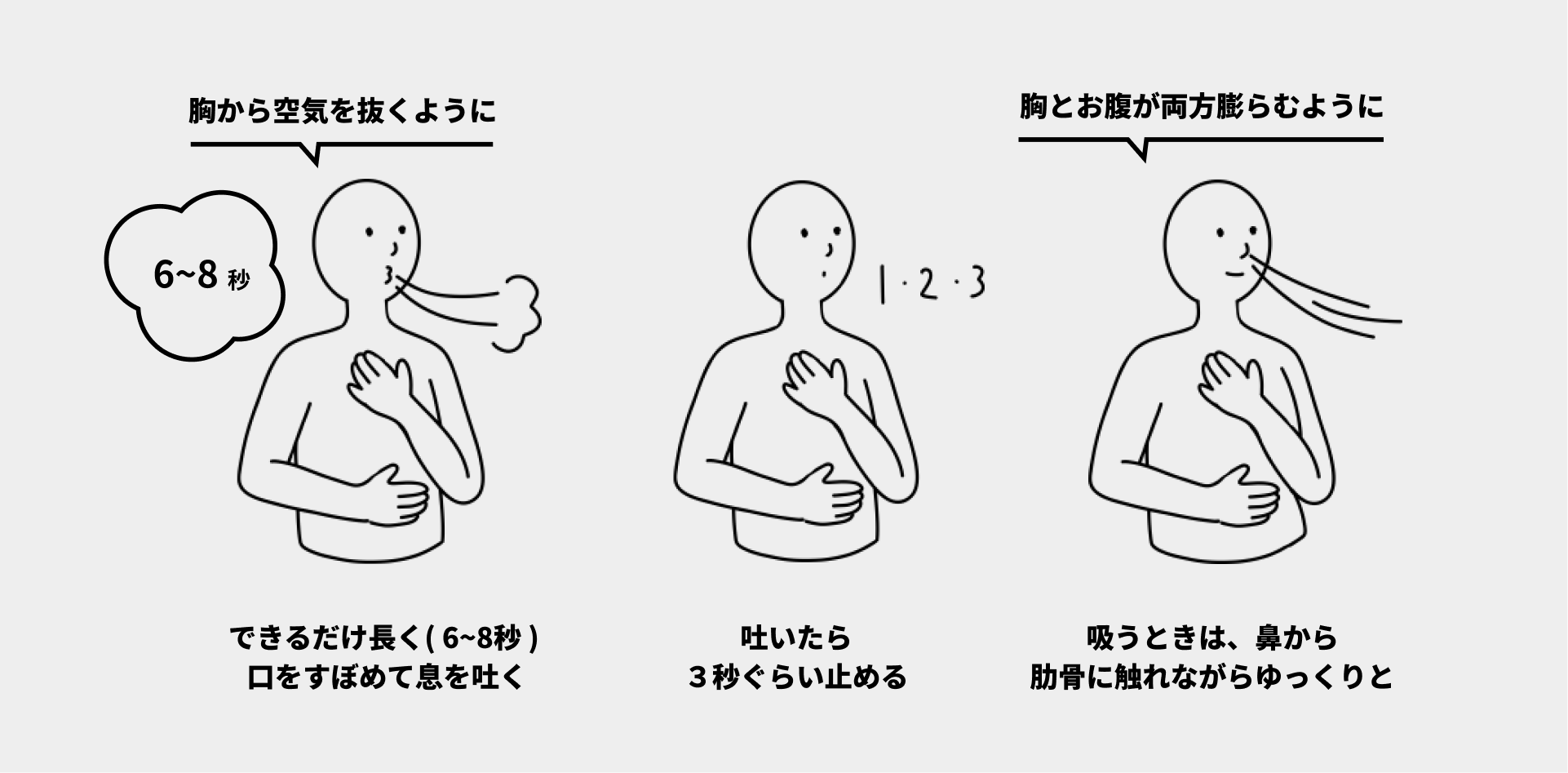
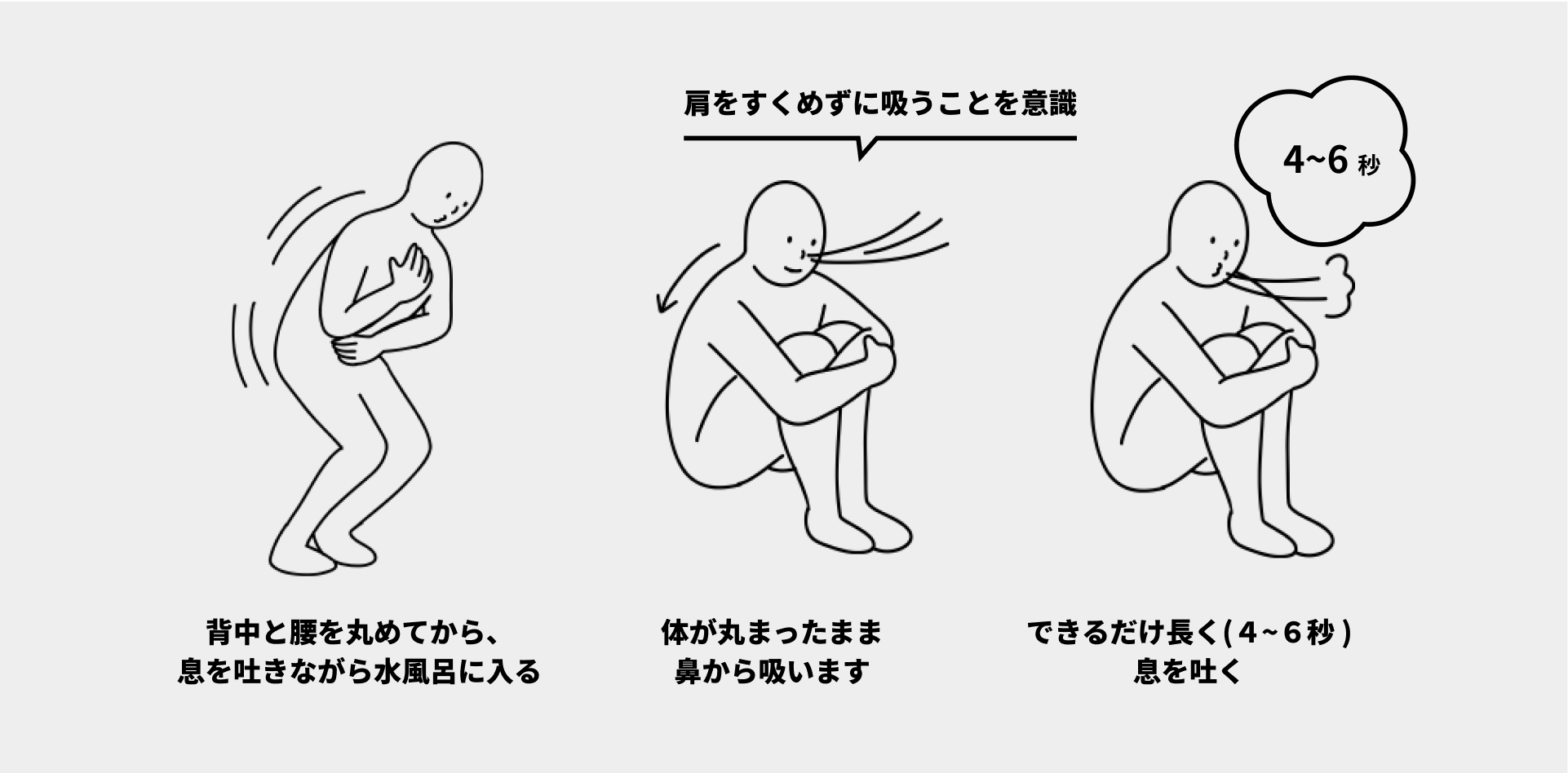
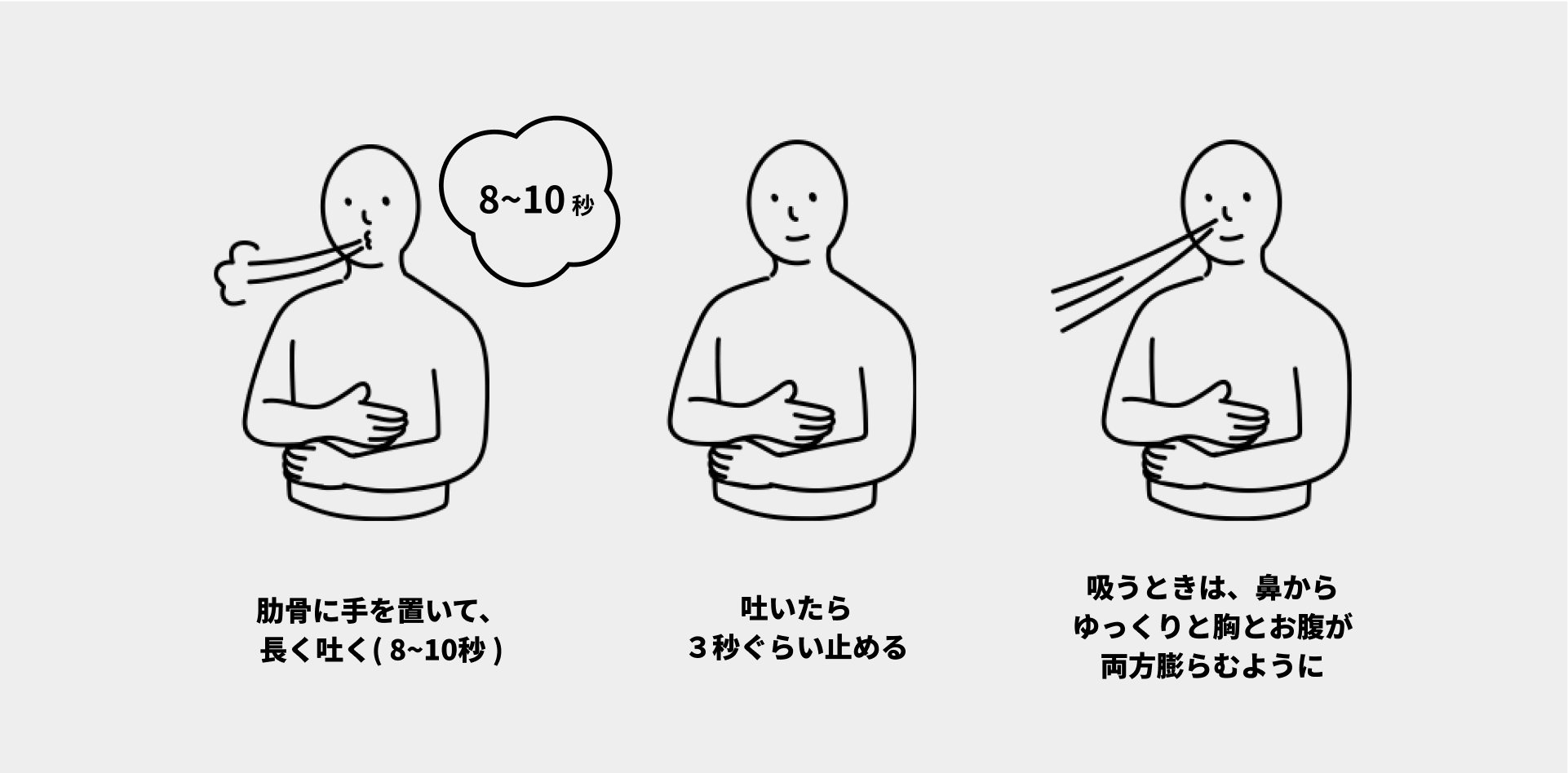
Introducing the deep breathing method used in this experiment!
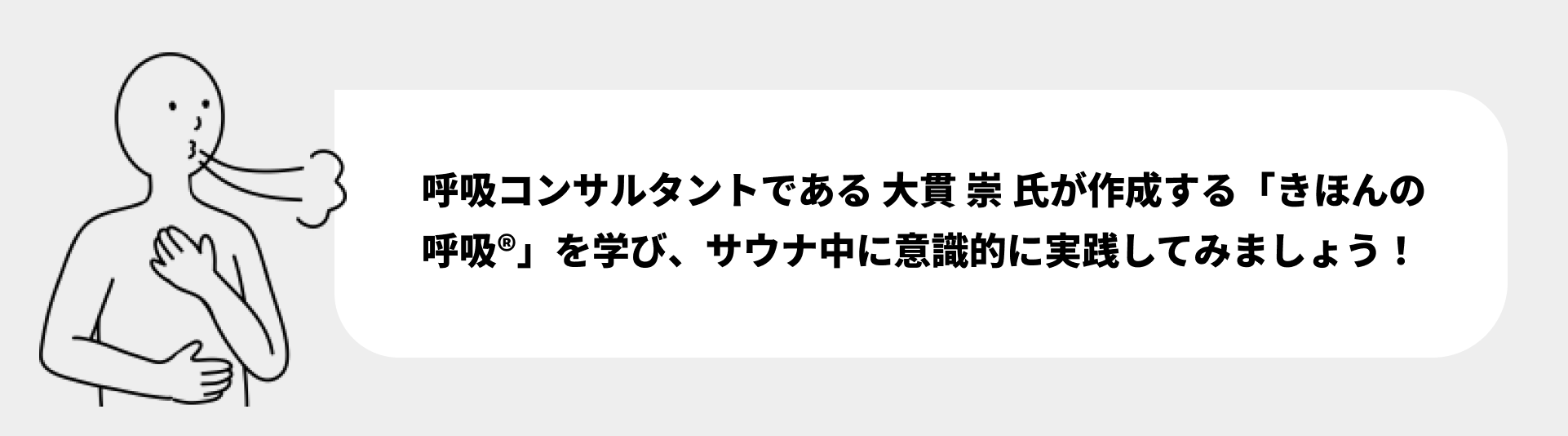
Breathing in the sauna room
Breathing in the cold bath
Breathing during rest
Particularly in a cold bath, breathing tends to become shallow! Are you gasping for breath!?
Shallow and rapid breathing is a factor that hinders relaxation, which slows down the entry into relaxation during the subsequent rest, and causes the timing of "totonoi" to shift.
Try to always be mindful of deep breathing!
That's all for the totonoi exploration news from 100plus!
We will reflect the insights gained from these studies and verifications in Sanokuni, and continue to support your exploration of saunas and totonoi.
Thank you for your continued support of 100plus and Sanokuni!